

Written by Hartwig E. Frimmel and Lisa Wasitschek
- Department of Geodynamics and Geomaterials Research,
- Institute of Geography and Geology, University of Würzburg
Gold in Alaska
Led by Erin Marsh and Doug Kreiner (USGS)
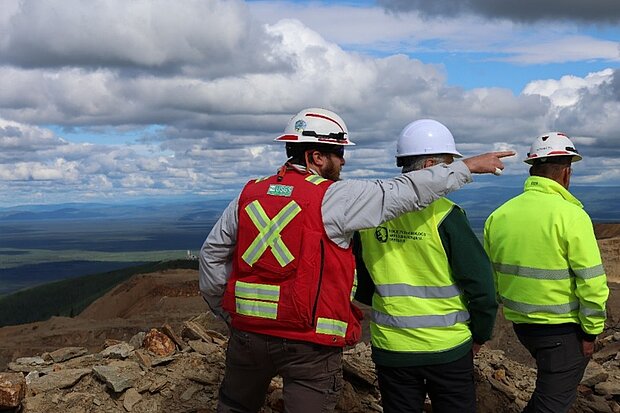
Field trips are always highlights of SGA Biennial Meetings and this year’s 18th SGA Biennial Meeting in Golden, Colorado, was no exception. Amongst the various field trips offered to a number of exciting destinations, the pre-conference Alaska Gold trip was possibly the pinnacle, because it combined one of the most exotic destinations with stunning landscapes, untouched nature and splendid geology, studded with great ore deposits.
The field trip, led most competently by Erin Marsh and Doug Kreiner from the USGS started in Fairbanks, where our illustrious mix of participants from industry, government and universities met on 27th July and received an excellent evening lecture introducing everybody to the general geology and metallogeny of Alaska.
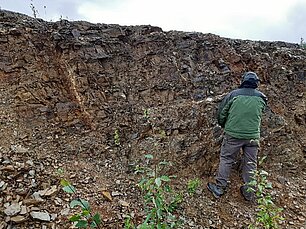
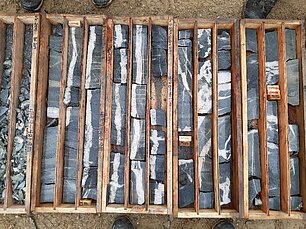
The following day was spent largely at the Golden Summit Project, a gold exploration project by Freegold, which has reached an advanced stage, set to go into a pre-feasibility study soon. So far, >800 Mt indicated and inferred resources @ 1.1 g/t Au and a cut-off grade of 0.5 g/t Au have been delineated, most of which is hosted by quartz veins (Figs. 1, 2). The project is not only geographically close to the famous Fort Knox deposits but bears also many geological and metallogenic similarities, supported by similar ages of around 90 Ma. The hospitality at the exploration camp was exceptional: in my entire career I have never been greeted by a warm buffet set up in the field with bouquets of fresh flowers on the table; just a pity that the weather didn’t play along!
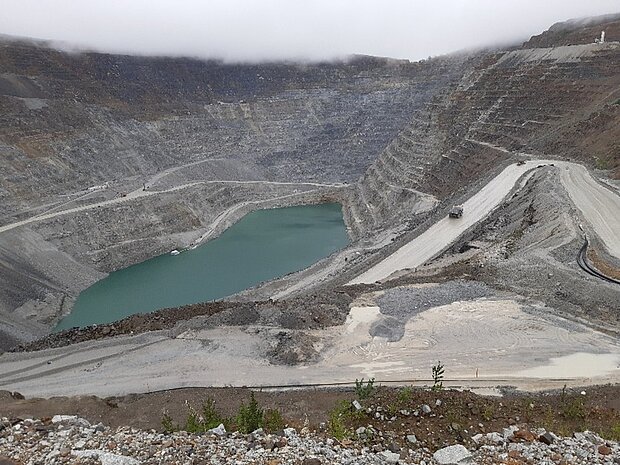
On 29th July we visited Fort Knox, one of the most legendary gold deposits of Alaska, where placer mining started as early as 1903. Today Kinross is operating an open pit there (Fig. 3), from which gold has been extracted from granite- to granodiorite-hosted anastomosing quartz veins since 1996. Low-grade ore is heap-leached on a grand scale – a quite remarkable operation bearing in mind the overall cold climate there.
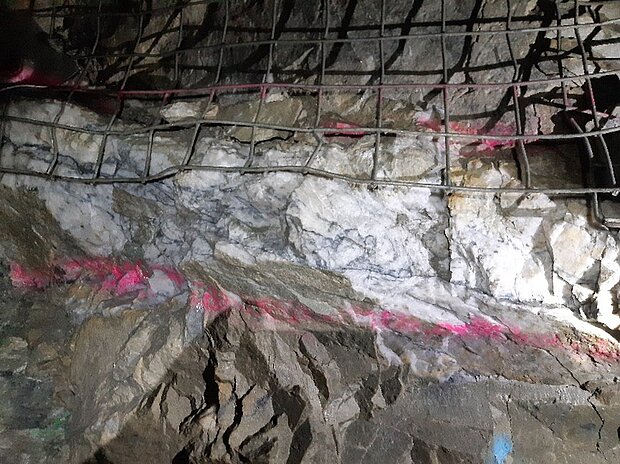
The principal destination on the next day was Pogo, a remotely located underground mine operation by Northern Star Resources. We had the opportunity not only to examine lots of drill core but also to visit the famous Liese vein – the principal ore body underground (Fig. 4). The observations made by the group led to intense debate on the ore genesis, that is, whether the deposit is intrusion-related, of orogenic type or an altogether different type of gold deposit.
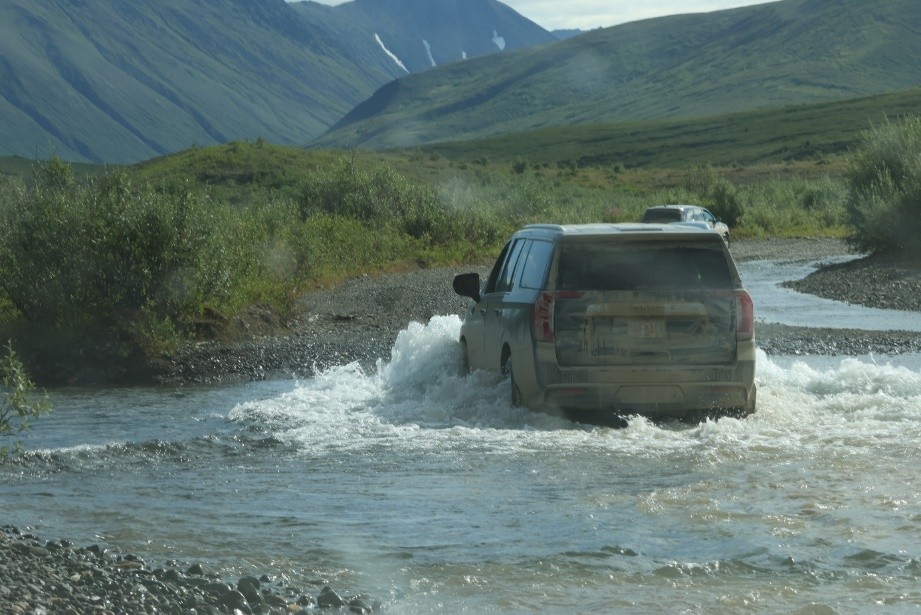
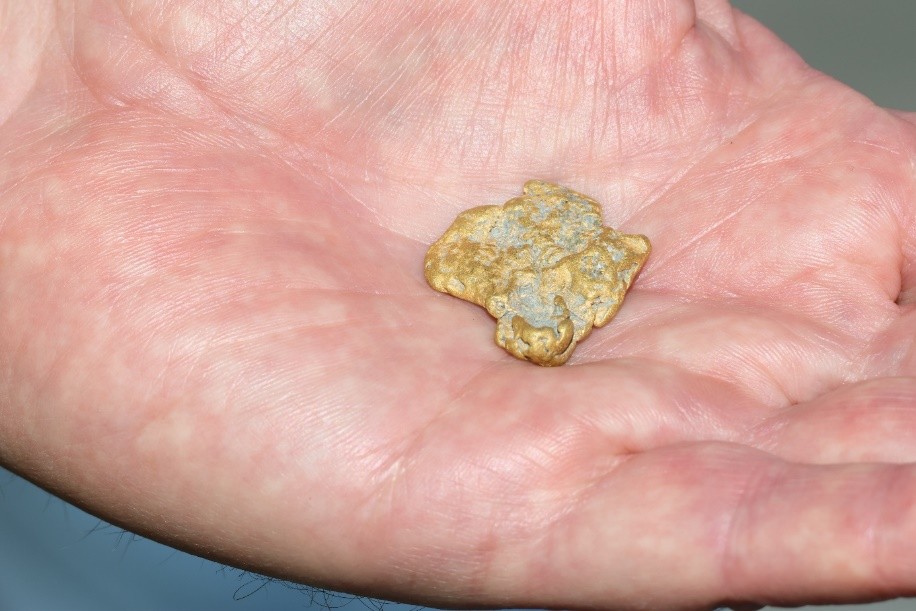
The final day took us, after a fantastic drive (Fig. 6) along the Denali Highway through spectacular mountain landscapes (Fig. 7) to Valdez Creek, which produced >18 t of placer gold, mainly between 1984 and 1995. Currently, further placers are being worked along a tributary to Valdez Creek (Fig. 8) as well as exploration for the lode source of the placer gold, conducted by Valdez Creek Mining.
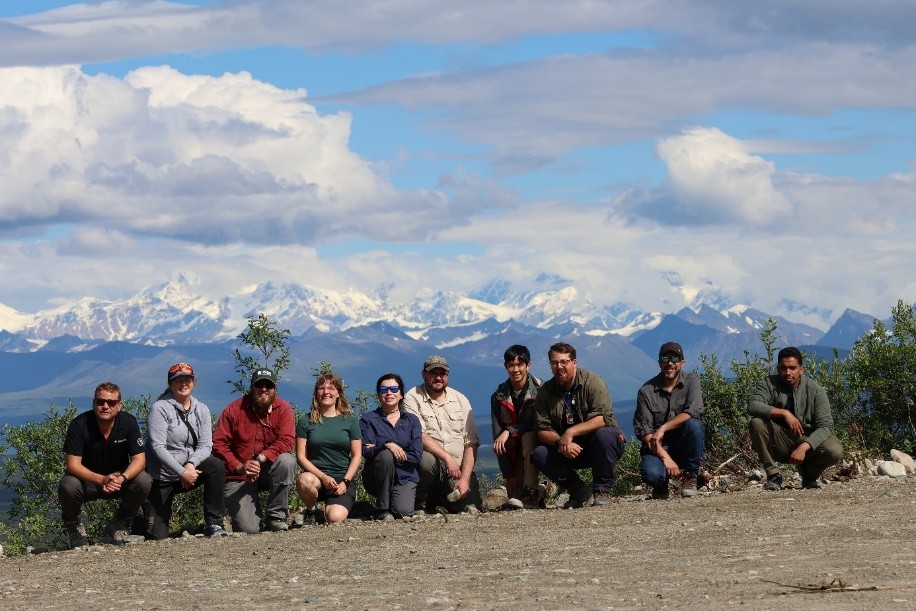
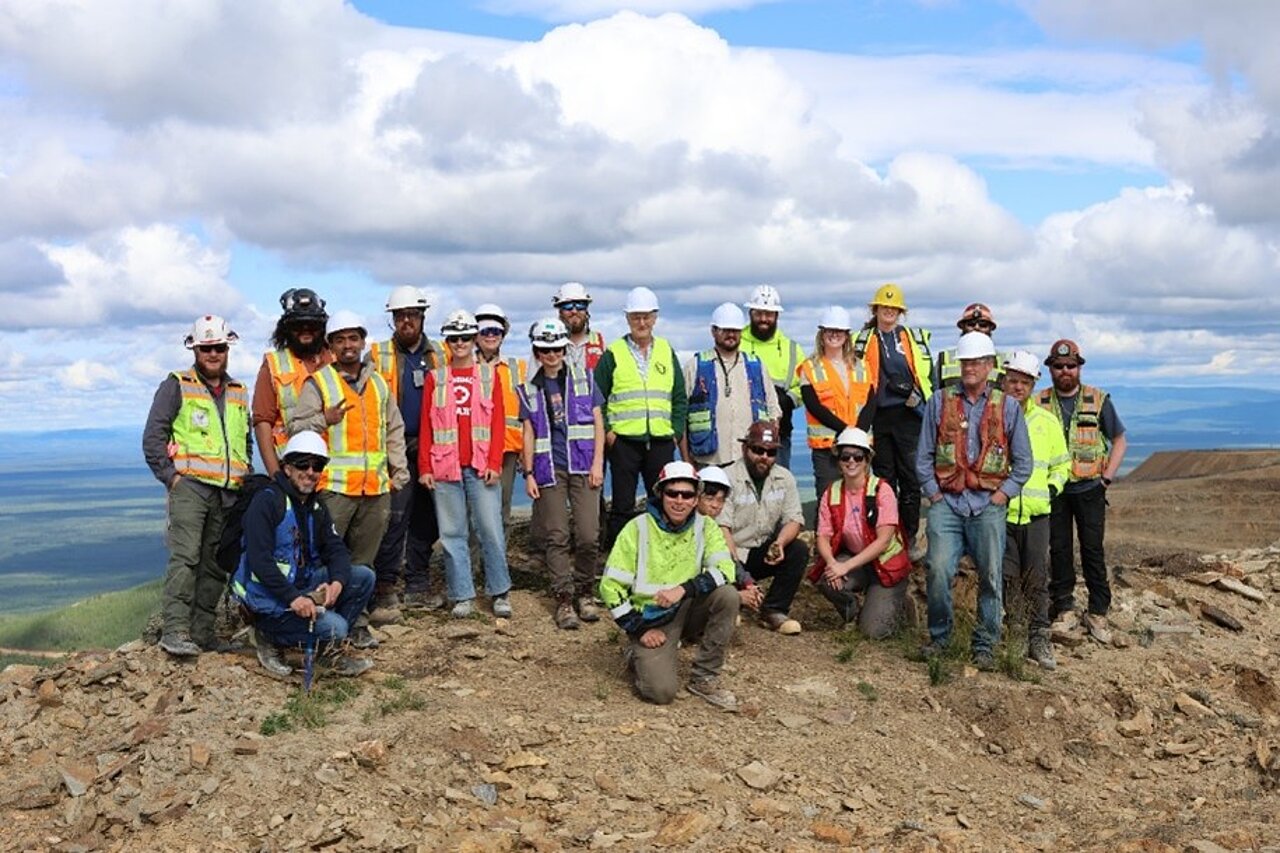
We (Fig. 9) thank our field trip leaders, Erin Marsh, Doug Kreiner, our third driver, Rob McDermott, the Freegold team at Golden Summit, the Northern Star team at Pogo, Chris van Treeck and the entire Kinross team, as well as John Cioffoletti from Valdez Creek Mining for their great hospitality and willingness to share their geological knowledge with us.